Technology
ICE Is Inspiring Latinos to Vote in Historic Numbers
By Marcus Chen
Advertisement · Why this ad?
Marcus manages the day-to-day editorial workflow across all brands, coordinating coverage assignments and ensuring editorial standards are met. He previously served as city editor at the Pioneer Press and holds a degree in Political Science from Carleton College.
More from Marcus →
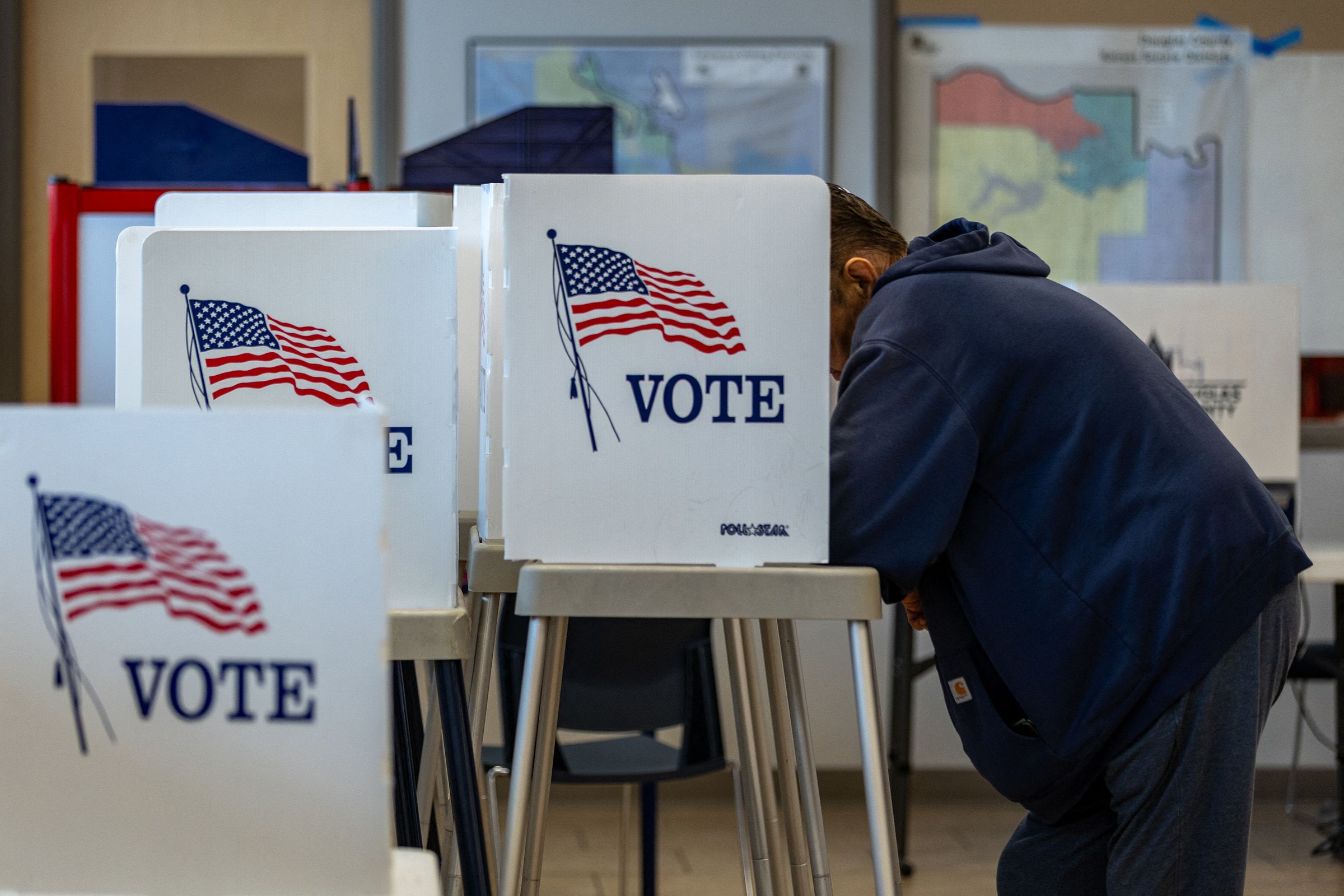
As the sun rises on Election Day, New Yorkers prepare to cast their votes, but a troubling trend looms over the democratic process: the use of artificial intelligence in voting decisions. With the rise of AI chatbots like ChatGPT and Claude, many citizens may be tempted to seek guidance from these digital assistants. However, relying on AI for such a critical civic duty raises serious concerns about accuracy, bias, and the integrity of our electoral system.
Election Day is a pivotal moment for democracy, where every vote counts. The introduction of AI tools in decision-making can distort this fundamental process. AI chatbots, while impressive in their ability to generate human-like text, are not infallible. Reports of hallucinations—instances where AI generates false or misleading information—are alarmingly common. This can lead to voters receiving incorrect information about candidates or issues, ultimately skewing their choices.
The stakes are particularly high in a city as diverse and politically charged as New York. With a population that includes a multitude of perspectives and backgrounds, the potential for AI to misinterpret or misrepresent voter needs is significant. The use of AI in this context could undermine the very essence of informed voting.
Moreover, New York's election landscape is uniquely complex, with numerous local races and ballot measures that can be difficult to navigate. For instance, voters might find themselves faced with propositions that affect their neighborhoods directly, such as zoning laws or public transportation funding. A misinformed decision, influenced by flawed AI guidance, could lead to outcomes that adversely affect local communities for years to come.
Another pressing concern is the inherent bias present in AI algorithms. These systems learn from vast amounts of data, which can include historical biases and inaccuracies. As a result, AI chatbots may inadvertently promote partisan viewpoints, steering voters towards specific candidates or policies based on skewed interpretations of data.
In a city where political affiliations run deep, the implications of biased AI recommendations could be far-reaching. For instance, a voter seeking information about local candidates might receive recommendations that align with the biases of the AI’s training data, rather than an objective overview of all candidates. This could disenfranchise voters who rely on these tools for guidance, leading to a less informed electorate.
Local political analyst Dr. Emily Chen notes that AI bias can also exacerbate existing inequalities in voter engagement. “Low-income neighborhoods and communities of color often have less access to reliable information. If AI tools, which are supposed to democratize information access, are biased, they could further alienate these groups,” she explains. This highlights the critical need for transparency in AI development and the importance of including diverse voices in the training data.
Voting is not just a mechanical process; it is a deeply personal decision that reflects individual values and beliefs. The human element of voting—understanding candidates, engaging in discussions, and weighing options—is critical. AI lacks the emotional intelligence and nuanced understanding required to navigate these complex decisions.
For many New Yorkers, the act of voting is a culmination of community engagement, family discussions, and personal reflection. Relying on AI diminishes the richness of this experience, reducing it to cold data points and algorithmic outputs. The importance of family and community in shaping our political views cannot be overstated, and AI cannot replicate this essential human dynamic.
Local resident and community organizer Jamal Wright emphasizes the importance of grassroots discussions in the voting process. “We need to talk to each other, share our stories, and understand the stakes of our decisions. AI can’t replace that. It’s about building relationships and trust within our communities,” he says. This sentiment underscores the value of human connection in fostering informed civic participation.
Community leaders and local organizations are raising alarms about the dangers of AI in the voting process. Groups like the New York City Board of Elections are advocating for informed voting practices, emphasizing the need for voters to engage with trusted sources and participate in local discussions. They stress that technology should enhance, not replace, the democratic process.
Local activist Maria Gonzalez, who has been involved in voter education for over a decade, warns, "We need to ensure that our communities are not misled by technology. The integrity of our elections is too important to leave to machines that can’t understand the human experience." Her sentiments echo a growing concern among voters who feel that AI could distort their voices in the democratic process.
Furthermore, organizations like the Brennan Center for Justice are conducting research on the implications of AI in voting, providing resources to educate the public on these risks. Their work is vital in equipping voters with the knowledge they need to navigate the complexities of modern elections without falling prey to misleading AI guidance.
As New Yorkers head to the polls, it is crucial to approach the use of AI with caution. While technology can play a role in enhancing voter engagement—through educational resources and outreach—it should never replace the fundamental act of informed decision-making. Voters are encouraged to seek out reliable information from local news sources, community forums, and civic organizations.
The upcoming elections are an opportunity for citizens to reaffirm their commitment to the democratic process. Engaging with fellow voters, discussing issues that matter, and making informed choices based on comprehensive understanding are essential steps in preserving the integrity of our elections.
Local civic leader Sarah Thompson emphasizes the importance of community involvement in this process. “We all have a role to play in ensuring our democracy functions as it should. Let’s educate ourselves and each other, and make sure we are making decisions based on real conversations, not algorithms,” she urges.
Ultimately, the decision to use AI in voting rests with the individual. However, it is essential to recognize the limitations and risks associated with these technologies. As New Yorkers, we have the power to shape our democracy, and it is our responsibility to do so with care and consideration.
In a time when misinformation can spread rapidly, turning to AI for guidance may seem convenient, but it comes with significant risks. The richness of our democratic process lies in our ability to engage with one another, understand diverse perspectives, and make informed choices. Let’s prioritize our communities and the values that bind us together as we approach the polls.
By Marcus Chen

By Marcus Chen
By Katherine Langford

By Marcus Chen